
Yes, that’s the Stalker7 tagline. After all, I write spec-fiction as well as tabletop war game rules.
But here, I’m referring to the challenge of narrative wargaming. A weird alchemy of combining cooperative storytelling in role playing games with the inevitable confrontation of tabletop combat. And this post is a few thoughts on that alloy of two hobby elements.
Crying ‘Fire’ in a crowded theater of the mind.
One of the objections I’ve encountered in my own game sessions is from RPGers who arrive to find a fully dressed game table. They say, ‘It doesn’t matter what we imagine, what we do; we’re going to end up there.’
Yes. And there’s going to be a fight.
On one hand, I come at the hobby as a mini-war gamer. Damn proud of it, too. I like toy soldiers. On the other hand, I enjoy stories and genuinely appreciate how they unfold in a RPG session. Between the two however, any session I run has minis on the table and at least one battle. After all, story is conflict and the obvious conflict is battle.
In the hobby context, ‘story’ is there to generate a sense of immersion, to make the game experience more enjoyable. My characters, my squads, my platoons are on the table fighting for a reason, by god, and they need to win. Ideally then, players participate not just in tactical decisions, but in the drama of the game/campaign’s story arc.

PLAYER AGENCY
When it comes to participation, I hear a lot about player agency from the RPG crowd. ‘Sand Box versus Railroad’. From what I can tell, ‘sand box’ is ideal while ‘railroading’ is the unpardonable sin; a railroad GM/session/campaign implies the players aren’t free to fully express themselves. (Or rather, their character can’t express themself however they imagine.) That’s likely the root of the complaint over a prepped game table; no freedom to steer the story somewhere else.
Dialing unconstrained license down a notch or two, I think ‘railroading’ means the players feel like they don’t have any choices – or that their choices don’t affect the outcome in any meaningful way. (they might as well not have any)
So IMO, if a player wants to go completely off the rails – “I signed on to a dungeon delve campaign but I decided my character is claustrophobic and insists on staying in the city tavern, hitting on bar maids’ – then they’re playing the wrong game. The second example though, is regrettable. After all, the idea that players, individually or as a group, could significantly impact an imminent battle/confrontation – resolving it in a creative, bat-shit crazy, or otherwise unimagined way – is the stuff of game group legend.

TACTICAL RPG OR NARRATIVE WARGAME?
I’m a wargamer. (Did I mention I like toy soldiers?) I favor combat-centric games, and stories that lead to, or have battle as a major narrative element.
Now I know ‘tactical RPGs/narrative wargames’ aren’t new and that everyone has their own take on ideal levels of complexity and realism, on the necessity of a strictly defined/existing fictional setting, on the amount of book keeping required. Even the optimal amount of time/material a player ‘should’ invest in the game.
However, at this stage of life with the current group of fellow gamers, finding one (or designing one) that sits on the casual, beer-n-pretzel side of the table top war game spectrum is something of a unicorn.
I’ve had varying degrees of success over the years. The best results – that I recall – was a combination of the campaign story from Band of Blades (defeated army fighting rearguard actions against the Forces of Darkness as they retreat across country toward the safety of an impregnable stronghold) with weekly battles run with Song of Blades and Heroes engine.
Consistent Combat – check.
Campaign Story – check.
Focused Player Agency – check.
Impactful Decisions on and off the battlefield – check.
It was more involved than a string of loosely related ‘skirmish-of-the-week’ sessions, but it worked. The guys who participated still mention it, years later.
That’s an ideal story line for a narrative wargame. Buckets of strategic and tactical tension. I’m not sure it has a lot of replay-ability. “Oh great. Another retreat from a overwhelming evil. Let me guess… there’s limited resources and a race against time to the impenetrable Sanctuary, right?”
MENUS AND BOUNDARIES
I did learn a couple things from that however, the most important being the “menu.” Options. It may be a specific cuisine with a limited selection. (Even a sandbox has sides.) It will mean more prep, prep for scenarios the players may not choose.
But sprinkling narrative alternatives at various junctures throughout the campaign creates the illusion of choice. Even though the campaign has guard rails, and I, as the GM, know the general direction and final destination of the campaign, and have established an inevitable climactic confrontation, how the players arrive, the course they take, the tone they set on the journey, the good and bad things left in their wake, needs to be in their hands.
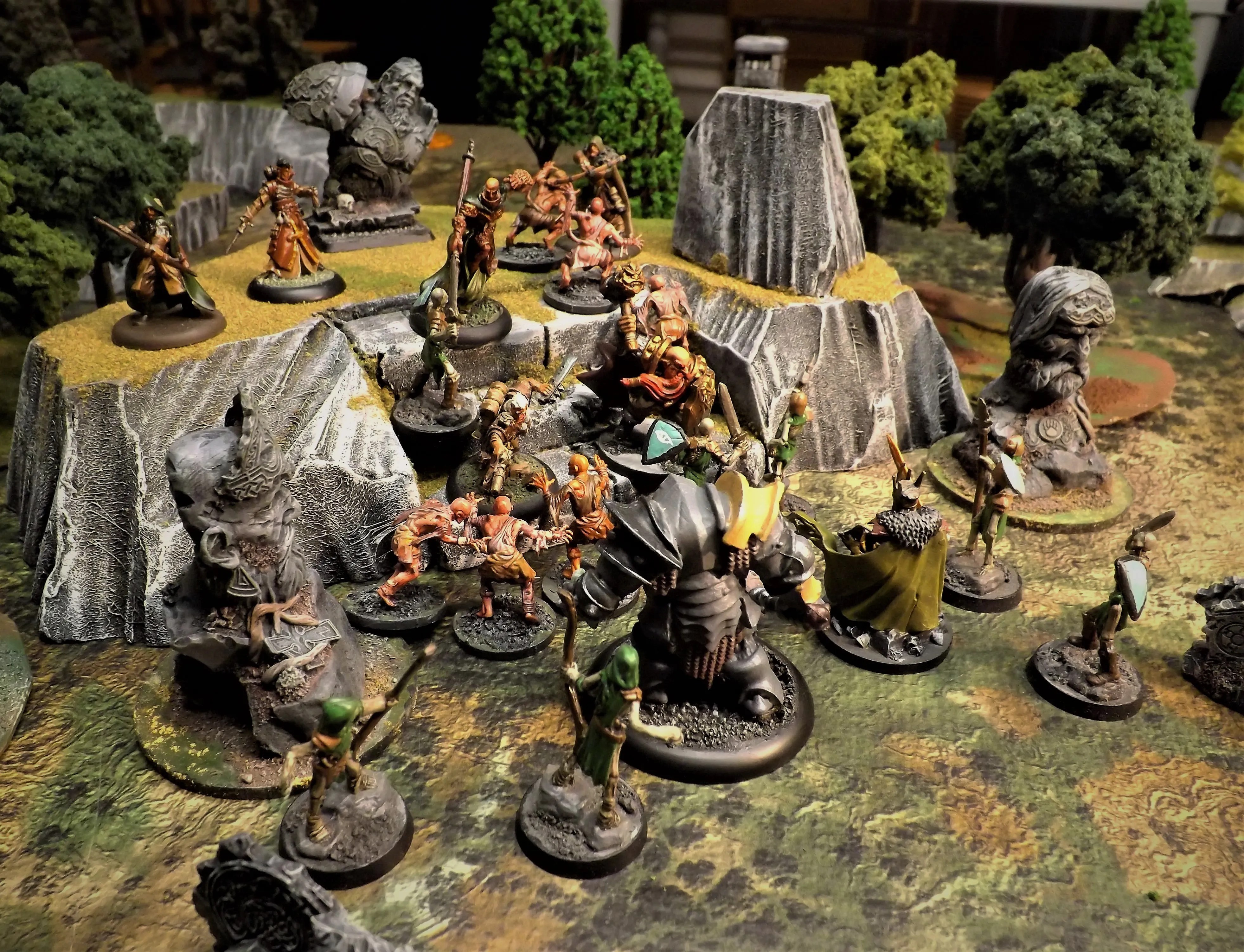
End of the day, end of this post, I’m still chasing this thing. Figuring out as I go, hopefully making mistakes in the right direction. CCWC’S upcoming campaign, FARLIGHT43.2, will not only put the next rule set through its paces, it’ll give me a chance to get the narrative and tactical cogs to mesh smoother in what I hope will be a solid, beer-n-pretzel tactical RPG game engine.

Thanks for stopping by. Have an excellent day. This being October, I foresee some Orks and Nightmares in the near future.
And if you’re interested in fending off an alien invasion, take a look at Insurgent Earth. Print at Amazon. PDF at Wargame Vault.
Interested in Stalker7 Games and Stories?
Sign up for the S7 quarterly newsletter and receive special scenarios, exclusive content, and information on upcoming releases.
Thanks and Good Hunting.

Leave a Reply